Skip to content
Creative Ways to Write Creative Briefs [+ Templates and Examples]

Creative work is often thought to be instinctive instead of planned—not true. Seasoned marketers love creative briefs!
And there are plenty of good reasons why –
You get a clear plan of how to go about things.
You can chalk out trackable goals and requirements.
You can define the scope, campaign goals, deliverables, and deadlines proactively.
You can ensure everyone on the team is on the same page, working without confusion or misunderstandings.
However, the catch is that it is not always easy to think straight—a prime requirement when creating any sort of creative brief.
So, to help you, we’ll cover everything you need to know about creative briefs in this comprehensive guide. Let’s go!
What Is a Creative Brief?
A creative brief is essentially a type of blueprint that guides different teams to work together.
It captures all the essential information teams need to drive successful projects, such as the project scope, deadline, budget, goals, target audience, brand voice and tone, and more.
For example, in the case of website creative briefs, various teams, such as copywriters, marketers, graphic designers, web developers, etc., use the creative brief to ensure that the website ticks off all the predefined creative goals.
This process is often facilitated by creative advertising agencies, which specialize in turning these briefs into compelling campaigns that resonate with the target audience.
The Importance of Writing Creative Briefs
So, the general advantages of a creative brief include:
- Improved team collaboration where each team works with a better understanding of the creative requirements as well as how to tackle challenges during the project lifecycle
- Enhanced stakeholder alignment and better expectation management as each deliverable gets completed
- Contextual messaging that drives creativity while documenting the project’s important data simultaneously (read: intended target audience, KPIs to be measured, potential risks, etc.)
All in all, a creative brief doubles up as a guiding principle for your teams so that they can achieve the creative campaign’s goals with less friction and iterations!
12 Must-Have Elements in a Typical Creative Brief Template
Want to restrict the back-and-forth between teams with your creative brief?
Get your creative brief template in line.
Typically speaking, a good creative brief often comprises 12 key elements that communicate everything your creative teams need to know to get started on the right foot:
1. Project Name
The project name refers to a clear and concise title for the project. It provides a quick reference point for all team members.
Example: “Redesigning a Company Website – Project [XYZ]”
2. Company Background
This section provides important context about the company, such as its origins, the industry it operates in, its work culture, and its mission.
This piece of information helps creative teams to better align with the company’s identity.
Example: “Our company, [XYZ Corporation], is a leading tech company that specializes in innovative consumer electronics and has been in business for over a decade.”
3. Objectives
As the name suggests, the Objectives segment outlines the project’s goals, what it aims to achieve, and the expected outcomes.
Example: “The primary objective of this campaign is to increase brand awareness by 20% and generate 10,000 pre-launch sign-ups for our new product.”
4. Target Audience
The target audience defines the intended audience for the project. It includes data relating to demographics, audience preferences, their current pain points, and so on.
A deeper insight into the ideal user base will define and guide the most creative briefs and approach for the marketing/advertising campaign.
Example: “Our target audience comprises tech-savvy millennials aged 25-35, with a focus on urban professionals. They love to use the latest products and are active on [ABC] platforms.”
Define project objectives and convert them into milestones.
Use Nifty
5. Brand Guidelines
The brand guidelines segment showcases the existing brand guidelines (if any), including preferred design as well as communication preferences.
For organizations aiming to maintain uniformity across various design elements, implementing a design system can be highly effective, ensuring consistent design and brand communication across all projects.
Example: “Please follow our brand guidelines outlined in the attached document, which includes specifics relating to usage of our logo usage, desired color palette, and intended tone of voice.”
6. Market Insights
Market insights highlight the latest and relevant market research to inform the creative approach using insights and not just intuition.
Example: “Our recent market research indicates that there’s an increased demand for eco-friendly products in our industry.”
7. Key Considerations
This section emphasizes specific factors/aspects that must be highlighted in the project (think: product features or market trends, for instance).
Example: “We need to emphasize our product’s sustainability and affordability as compared to our competitors.”
8. Project Scope
Project scope defines the specific tasks and deliverables within the scope of the project, providing clarity on what needs to be accomplished and how.
Example: “The project includes designing a new website, creating promotional materials, and launching a social media marketing campaign.”
9. Deliverables
This component lists the tangible items and assets that the creative team needs to produce as part of the project.
Example: “The deliverables include a website wireframe, product brochures, social media ad creatives, and a launch event plan.”
Define project scope, set deadlines, track deliverables, and more in one place.
Nifty
10. Budget
It outlines the allocated budget for the project and offers insights into any financial constraints (if applicable).
Example: “The allocated budget for this project is $100,000.”
11. Timeline
The timeline defines the project timeline. Make sure to include key milestones and deadlines, ensuring everyone is aware of the project’s time constraints.
Example: “The project should be completed within three months, with the website launch scheduled for the end of the second month.”
12. Approval Process
This segment answers questions relating to – What is the process for reviewing and approving creative work, and who are the key stakeholders involved?
Example: “All creative assets must be reviewed and approved by the marketing account manager before final production.”
How to Write a Creative Brief: A Step-by-Step Guide
Whether you’re creating a marketing creative brief, an advertising creative brief, or a website creative brief, following the right process is important.
Here’s a step-by-step guide you can follow when writing creative briefs:
Step 1: Collect Your Customer’s Requirements to the T
The journey of writing a creative brief begins with gathering all the pertinent information about what your customer requires.
To do this, engage in the following steps:
- Conduct thorough discussions with your client and teams to identify the former’s needs, objectives, and expectations
- Ask probing questions to ensure you have a comprehensive understanding of the project’s purpose, target audience, and specific ideas, as well as preferences the client may have.
Additionally, consider using a paraphrasing AI tool to rephrase and reword the gathered information effectively in easy-to-understand words. This can be especially helpful if you are taking notes during a long or complex meeting.
Step 2: Do Your Market Research
To develop a successful and effective creative brief, you need to be well-versed in the market in which your project will operate. Try the following tips:
- Leverage your marketing software to conduct research and gain insights into the industry, trends, competitors, and potential opportunities.
- Clearly outline your research goals by analyzing your customer’s preferences, assessing the market size, and evaluating the competition.
- Determine the demographic, geographic, and psychographic characteristics of your target audience. At this point, you need to ask:
- Who are your potential customers?
- What are their needs, behaviors, and preferences?
- Select the most appropriate research methods based on your objectives, such as:
- Surveys and questionnaires to gather quantitative data by surveying a large sample of your target audience.
- Interviews wherein you conduct in-depth interviews with key industry experts, customers, and stakeholders.
- Observational research in which you observe consumer behavior in real-world/online settings (depending on your requirements).
- Secondary research in which you analyze existing data, reports, and studies to get a better pulse of the target market.
This research will not only inform your creative strategy; it will also help you to position your creative project effectively in the market.
Step 3: Establish Goals and Outcomes
The third step is all about clearly outlining your project’s objectives and desired outcomes:
- Do you want to increase brand awareness?
- Do you wish to boost sales?
- Are you looking to convey a particular message?
Make sure to define these goals with specificity.
Remember, your creative brief should serve as a complete guide and a roadmap for achieving these objectives.
Nifty allows you to add custom details to your project thanks to its “Custom Fields” feature:
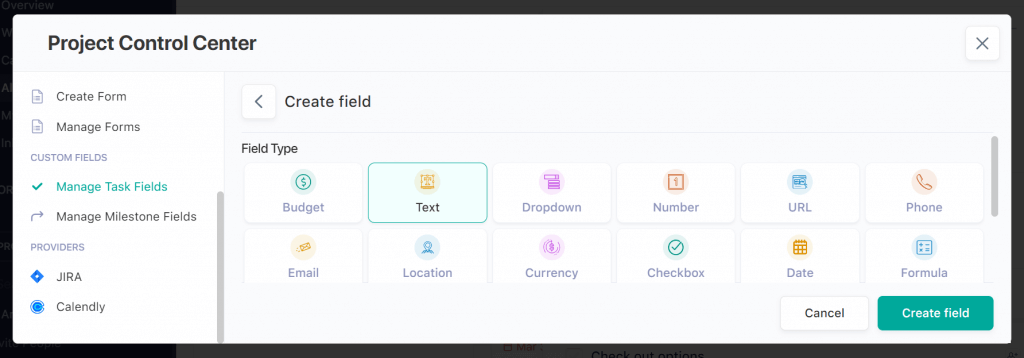
With this feature, you can ensure that none of the project’s critical details fall through the cracks.
You can also set and track project goals by tasks, task lists, custom tags, fields, and assignees:
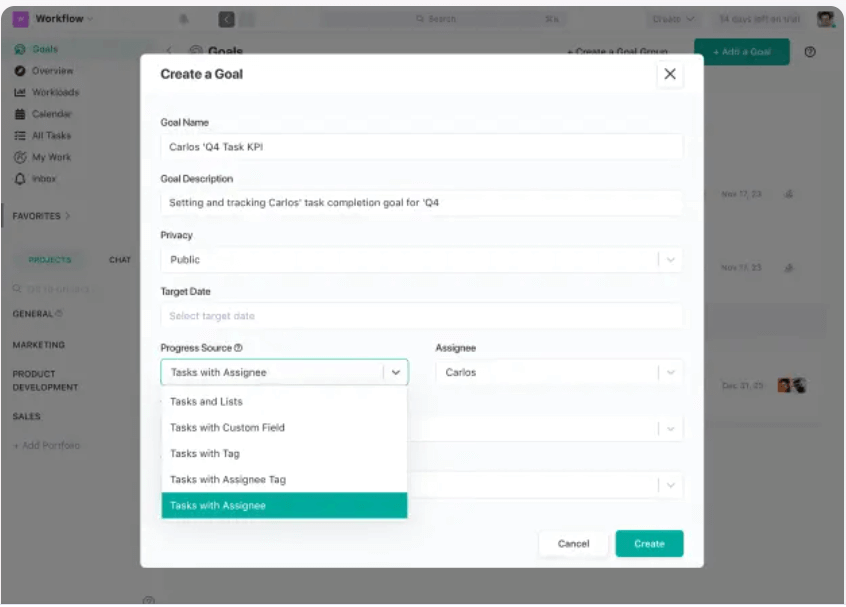
Nifty automates your goal data by automatically adding/removing tasks as and when they’re created based on custom tags, fields, and assignees.
That’s not all. Nifty enables you to leverage custom tags to track KPIs. For instance, you can create goals that automatically update and measure your team or individual’s performance with just a few clicks.
Step 4: Define Scope and Deliverables
Now that you’ve gathered all the useful information, it’s time to translate that data into the project scope and deliverables.
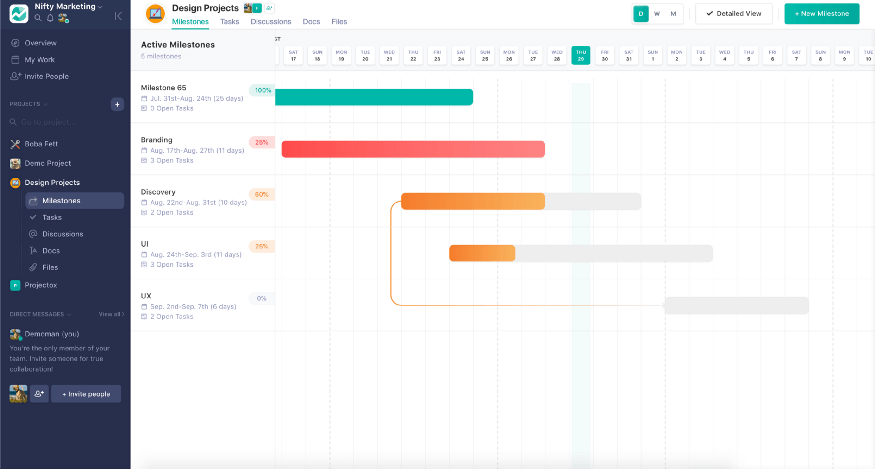
You can try Nifty’s Milestones feature to improve team alignment around project goals and sprints. This is done by visualizing milestones in an easy-to-understand Gantt chart format:
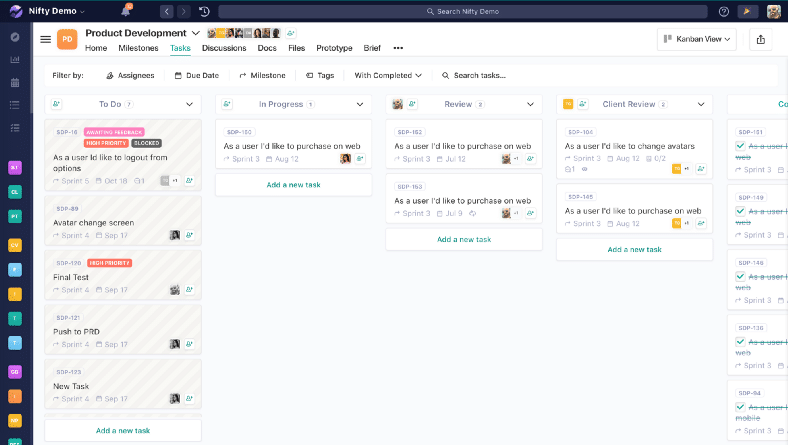
You can also leverage the Swimlane view to pilot objectives by intersecting project milestones and tasks as shown below:
That’s not all. The Milestones feature provides real-time automation of ‘in progress,’ ‘completed,’ and ‘overdue’ status based on the completion of tied tasks.
If your team deals with a repeating schedule, you can set up recurring milestones and ensure that the team never misses any important work again.
Step 5: Document All Your Findings
Collecting all the customer information is not enough.
You need to document everything, and that, too, document it in real-time.
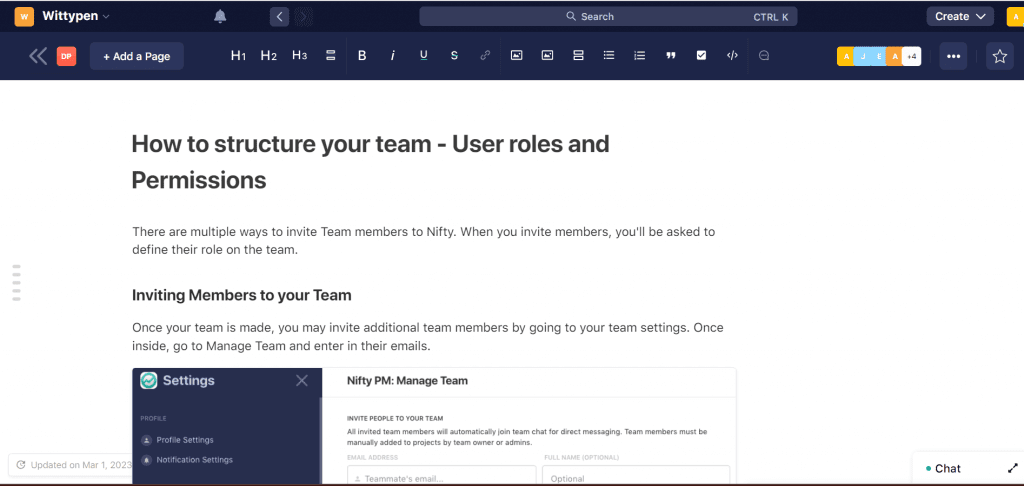
Nifty’s Docs feature allows you to:
- Create useful notes, docs, and wikis for your project
- Share the document with others using a simple link
- Integrate natively with Google Docs for faster and seamless working:
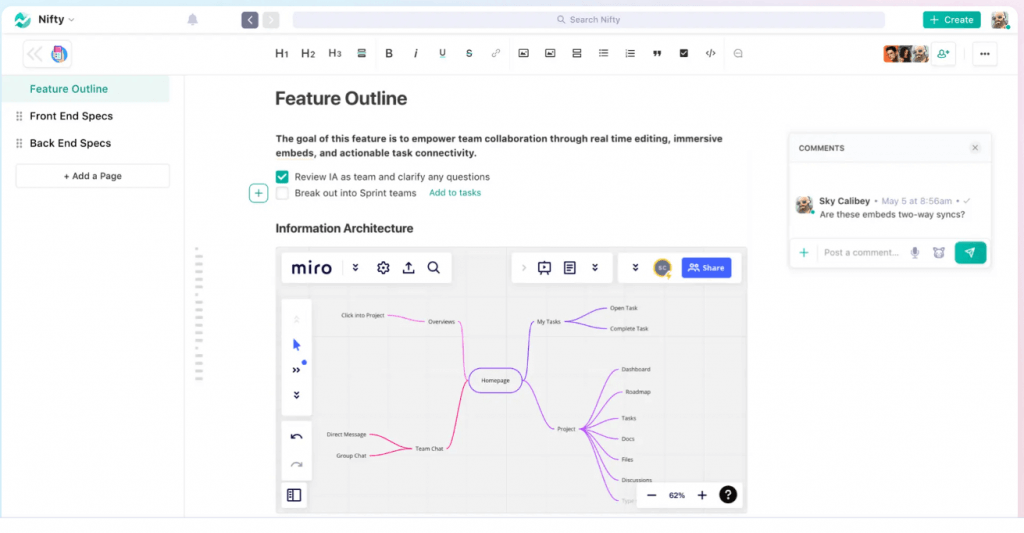
- Plan, track, and manage your workflow within one collaborative workspace
Pro tip: Once your creative brief is ready, plan a kickoff meeting. This will allow you to reassess if there might be any conflicts along the way collectively with the team. You can make the requisite changes and update the brief before the actual work begins.
7 Tips for Writing Creative Briefs to Get That Breakthrough Idea!
Writing creative briefs doesn’t follow a linear path, nor is there a ‘one-size-fits-all’ strategy that works.
However, having a few tips up your sleeve doesn’t hurt:
- Spot on: Make sure that the creative brief is clear, specific, measurable, and realistic. There’s no room for guesswork or blind spots.
- Not data-heavy: Ensure that the brief is not voluminous with endless data that’s forcefully added. Sticking to the less is more philosophy will empower your team to focus on what truly matters.
- Iterate: Continue to keep changing your creative brief as the requirements or scope evolves.
- Accuracy: Think of your creative brief as the bible that your teams will follow. This means there’s no room for any mistakes or inaccuracies.
- Context: Your creative brief should highlight what the brand has been communicating to the customers, what they want users to do next, and how the deliverables will fit into the overall communication strategy.
- Insights: Your audience insights should be at the heart of the brief. Any kind of marketing or communication you initiate must stem from what your customers want and why they want it.
- Alignment: Sometimes, in the creative flow, you can stray away from what was originally intended. You need to make sure that your creative brief is aligned with your brand’s objectives at all times.
In the end, use this checklist to ask the following questions:
- Does your communication single-mindedly convey your brand’s objectives?
- Does the content map to your ideal audience’s interests and insights?
- Is the team aware of the deliverable’s true deadlines?
- Are you constantly inserting the team and stakeholder feedback and pivoting in real-time?
- Are all your stakeholders able to access the creative brief anytime, anywhere?
5 Compelling Creative Brief Examples
Here are five examples of creative briefs worth getting inspired from:
Example 1. Airbnb – To convert digital connections into meaningful IRL experiences
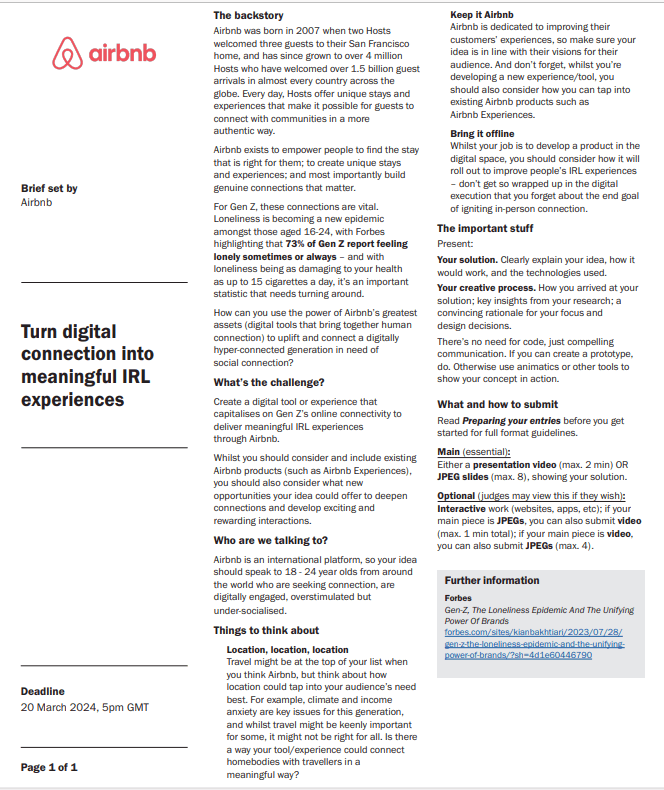
Here’s a creative brief example by Airbnb that was provided to participants entering a contest. But there’s plenty to learn from in this creative content brief too.
Notice how the brand provides:
- A backstory
- Details into Airbnb’s key challenges
- Points on what to focus on in the creative brief
Your brief should be as detailed and clear as this.
Example 2. PayPal – To reiterate what PayPal is all about in the customer’s mind
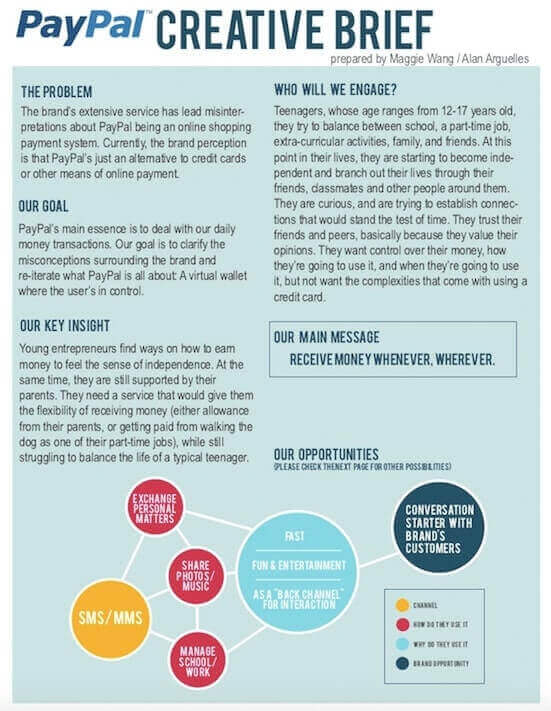
This is an example of a marketing creative brief which talks about:
- The brand’s key insights and research gathered over time
- The marketing channels to use
- Who the brand want to engage as the ideal target audience
Example 3. Nike – To promote the image that Nike looks after its factory employees
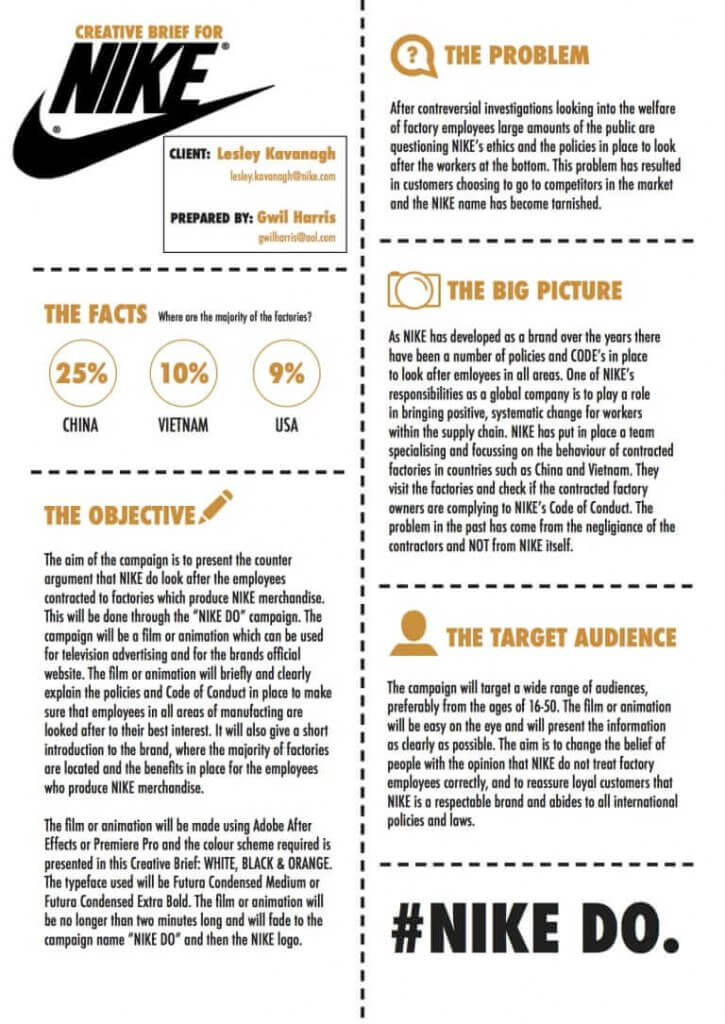
When it comes to creative briefs, it doesn’t get any better than Nike’s creative brief example outlined above.
The brand talks about the big picture in addition to the brand statement, target audience, and problem statement so that the team knows where they’re headed and how to head to their final destination.
Example 4. Gray’s Cookies – To get more customers to eat Gray’s healthy yet tasty cookies
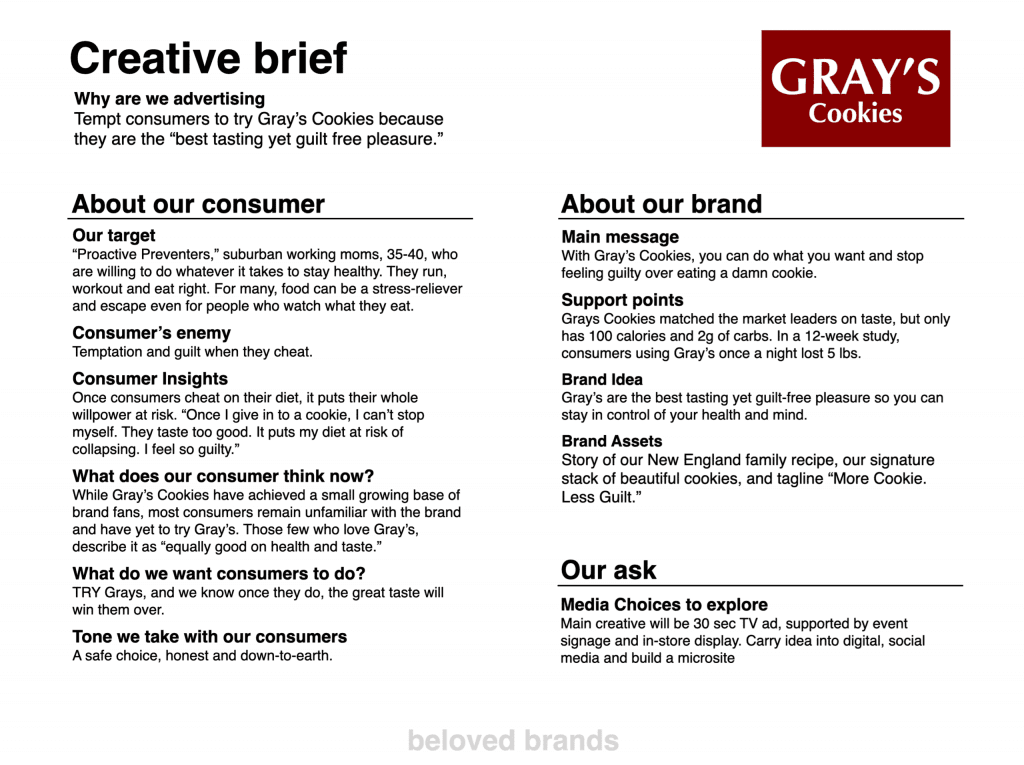
Here’s a creative brief example of an advertising agency whose creative brief comprises all the vital components you need to roll out helpful touchpoints, such as:
- Target audience
- Customer insights and current thinking
- What the business wants the customer to do
- The tone to include within the advertising deliverables
- Media assets and platforms to explore
Example 5. Netflix – To boost the number of subscribers during COVID-19
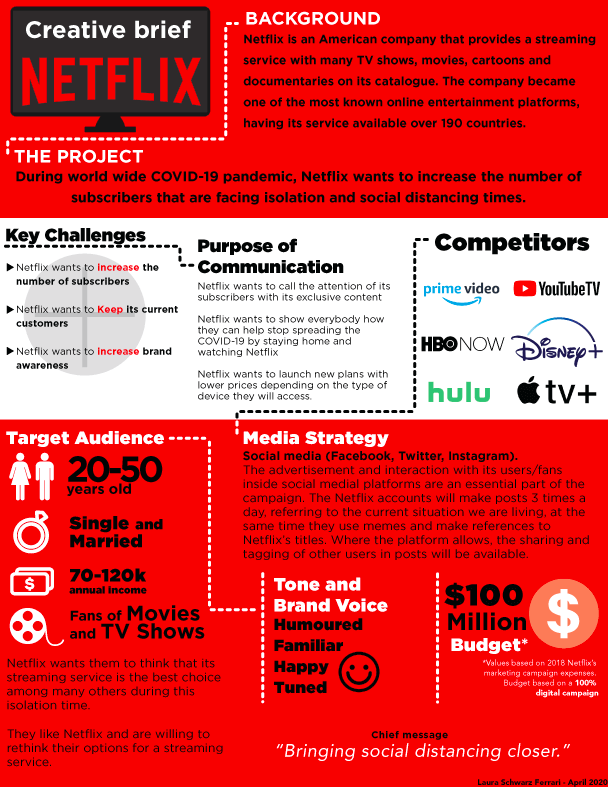
Our final and most extensive creative brief example on the list, Netflix gets many things right within its creative brief:
- Its media strategy is relevant and ‘hip’
- The target audience is represented in an infographic format, allowing for a quick read
- The brand tone and voice are explicitly mentioned
- The key challenges and purpose of the communication follow the S.M.A.R.T framework
Get Your Creative Briefs Sorted with Nifty
Creating a creative brief is one part of the story. You need to communicate the project’s goals and purpose to your teams.
However, the second equally important part is driving collaboration.
No project is a ‘one-man’ army. Your project will need internal and external collaboration between members so that everyone is on the same page at all times.
And this is where project management software like Nifty shines.
You can collaborate with every member of the ecosystem in real time using Nifty’s Discussion feature:
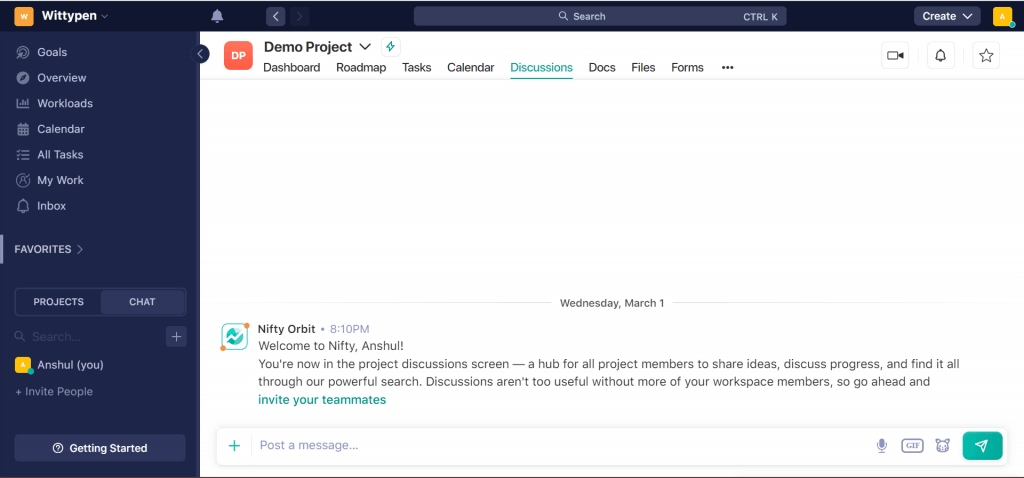
Plus, you can share ideas and drive meaningful discussions at the click of a button. Everyone can follow a singular plan of action and use it as a centralized point of reference for all deliverables.
Remember, creative briefs are always changing, and project leads need all the resources they can get to ensure everyone is working together.
Leverage Nifty’s project management features to stay organized and deliver creative products without breaking a sweat! Try Nifty for free.