Internal Communication: Definition, Importance, Types, and Tools
Key Takeaways
- Internal communication is the structured, two-way flow of information and feedback between people within an organization, distinct from external communication with customers and media.
- Internal communication is a critical function for organizational operations and HR professionals.
- Strong internal communication directly impacts company performance by keeping employees aligned with strategic goals.
- Overcoming communication barriers is essential to prevent project delays, low morale, and missed goals.
- Poor communication costs U.S. companies an estimated $15,000 per employee annually in lost productivity, making effective internal communications strategy business-critical in 2026.
- The main types of internal communication include vertical communication (top-down and bottom-up), horizontal communication, formal channels, informal conversations, and digital platforms.
- Strong internal communications directly improve company culture, employee engagement, crisis response, change management, and brand alignment.
- Building an effective internal communication plan requires clear goals, audience segmentation, consistent messaging, feedback loops, and measurable success metrics.
What Is Internal Communication?
Internal communication is the planned and continuous exchange of information, ideas, and feedback among employees and leaders within an organization, across all levels and locations.
Unlike external communication—which targets customers, partners, regulators, and social media channels—internal comms focuses on keeping your workforce connected, informed, and aligned with organizational goals.
In 2026, effective internal communication looks very different from the one-way memo broadcasts of the past. Modern employee communications are two-way, data-driven, and designed to support collaboration and engagement across hybrid and distributed teams.
Common channels used in 2026 include:
- Email and employee newsletters
- Intranet platforms and knowledge hubs
- Slack, Teams, and instant messaging tools
- Mobile apps and push notifications
- Digital signage and video platforms
- All-hands meetings and manager briefings
External Communication vs. Internal Communication
External communication and internal communication are two foundational pillars of effective communication within an organization, each serving unique but complementary roles in achieving business goals.
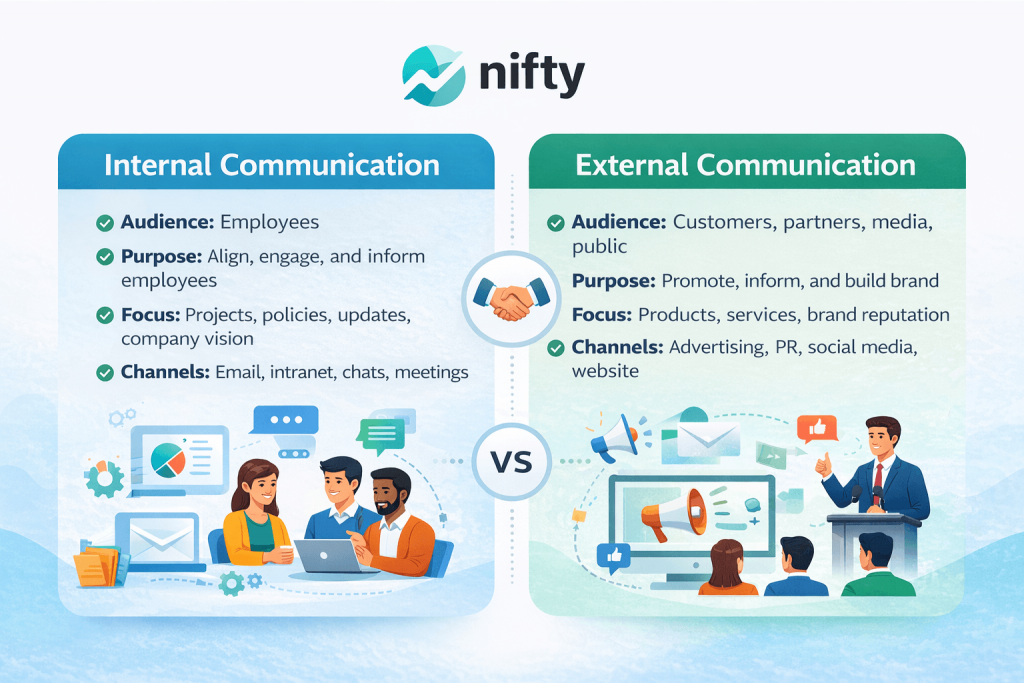
Internal communication focuses on the structured flow of information, feedback, and collaboration among employees, leaders, and teams inside the organization. Its primary aim is to keep employees informed, engaged, and aligned with the company’s vision and organizational objectives.
External communication, on the other hand, is the process of sharing information from the organization to audiences outside the company. This includes customers, partners, investors, regulators, media, and the broader public.
Why Internal Communication Matters in 2026?
Research estimates that poor internal communication costs U.S. companies over $15,000 per employee per year in lost productivity, driven by disengagement, misunderstandings, and turnover. Communication barriers in workplace internal communications can lead to project delays, low morale, and missed goals, ultimately impacting company performance.
In 2026, with hybrid work models, distributed teams, and over 80% of the global workforce being deskless or frontline, the complexity of keeping employees informed has increased dramatically. Office employees can no longer rely on hallway conversations to stay aligned, and frontline workers need mobile-first solutions to access company communications.
Strong internal communications deliver measurable benefits:
- 20-50% engagement uplifts through recognition programs and feedback loops
- 21% higher profitability in organizations with effective communication
- 6x higher success rates in change management initiatives
- Reduced attrition through improved employee experience
- Better customer satisfaction from brand-aligned employees
- Effective internal communication helps to establish a positive company culture and makes the company atmosphere encouraging and safe
Effective internal communications can significantly boost morale, enhance productivity, and minimize confusion or misinformation.
Establishing and Sustaining Company Culture
Company culture isn’t built through posters or value statements alone. It’s shaped through everyday messages, leadership tone in company meetings, and peer-to-peer conversations that reinforce “how we do things here.” Internal communication plays a foundational role in shaping organizational culture, helping to establish a cohesive and positive work environment.
Keeping Employees Informed and Aligned
IBM research found that around 72% of employees don’t fully understand company strategy when organizational communication is poor. This alignment gap leads to wasted effort, conflicting priorities, and frustrated teams. Key communications play a crucial role in ensuring consistent messaging, reducing rumors, and facilitating effective feedback channels across the organization.
Must-have updates for keeping teams aligned:
- Quarterly all-hands meetings covering strategy and OKRs
- Weekly project summaries tied to business goals
- “Strategy on a page” briefs for frontline teams
- Plain-language policy updates that reduce confusion
- Regular internal updates about projects, goals, and organizational changes
Sharing the organization’s vision through internal communication helps employees understand the company’s direction and purpose, fostering engagement and alignment.
Simplify internal communication with Nifty.
Get Started
Giving Employees a Voice
Two-way communication means employees not only receive information but can also share ideas, concerns, and employee feedback upward and across teams. Internal communication strategies that engage employees are essential for building a positive work environment. This drives innovation and builds trust.
Mechanisms that encourage employees to speak up:
- Anonymous feedback forms
- Skip-level meetings with senior leaders
- Open Q&A segments in town halls
Effective internal communication strategies foster employee engagement, alignment, and trust, resulting in a thriving workforce.
Maintaining Morale, Wellbeing, and Trust
Transparent updates during tough periods directly impact trust. Companies that provided honest, frequent communication during 2020-2022 pandemic disruptions and 2023-2024 tech layoffs saw engagement scores 2x higher than those using evasive messaging. Maintaining a positive attitude during crises is also crucial, as it helps support employee morale and fosters a constructive outlook.
Practical actions that boost engagement and maintain morale:
- Monthly CEO video updates addressing concerns directly
- Manager Q&A packs for cascading difficult news
- Wellbeing campaigns and recognition spotlights
- Honest acknowledgment of challenges alongside progress
- Publicly celebrate employee milestones and achievements to boost morale
Frequency and honesty matter more than “perfect news.” Employees respond better to timely, transparent updates—even when the news is difficult—than to silence.
Supporting Crisis Response and Change Management
Public health emergencies, mergers, product incidents, system outages—have proven that organizations with clear internal communication protocols respond faster and reduce misinformation. During these times, upper management plays a key role in communicating policies and organizational objectives, ensuring that employees receive accurate and timely information..
Change communication checklist:
- Identify who needs to know, by when
- Select appropriate communication channels
- Prepare manager talking points and FAQs
- Include clear calls-to-action
- Coordinate with external communication timing
- Ensure upper management communicates key policies and objectives, especially during crises
Documenting these steps in a meeting notes template ensures clarity and reduces confusion during critical transitions.
Streamline change and internal communication with Nifty.
Get Started
Protecting Sensitive Information and Brand Reputation
While open communication builds trust, some information requires careful handling. Ongoing investigations, pre-announcement financial data, and M&A negotiations need clear classification labels: public, internal-only, or confidential.
Do’s and don’ts for sensitive information:
- Do align timing with legal and regulatory requirements
- Do train managers on confidentiality expectations
- Don’t share speculation in informal conversations
- Don’t let employees learn breaking news from social media first
- Do establish clear escalation paths for questions
What are the Core Types and Channels of Internal Communication?
Effective internal communication uses multiple directions and channels. The right mix depends on your organizational structure, industry, and workforce composition. Over-reliance on any single channel—especially email—is a common failure point.
Supporting knowledge sharing and using internal communication to connect employees across the organization are essential for fostering collaboration and a sense of shared purpose.
It’s important to tailor communication platforms to specific needs, such as using an intranet for official policies and chat for daily work.
Vertical Communication: Top-Down and Bottom-Up
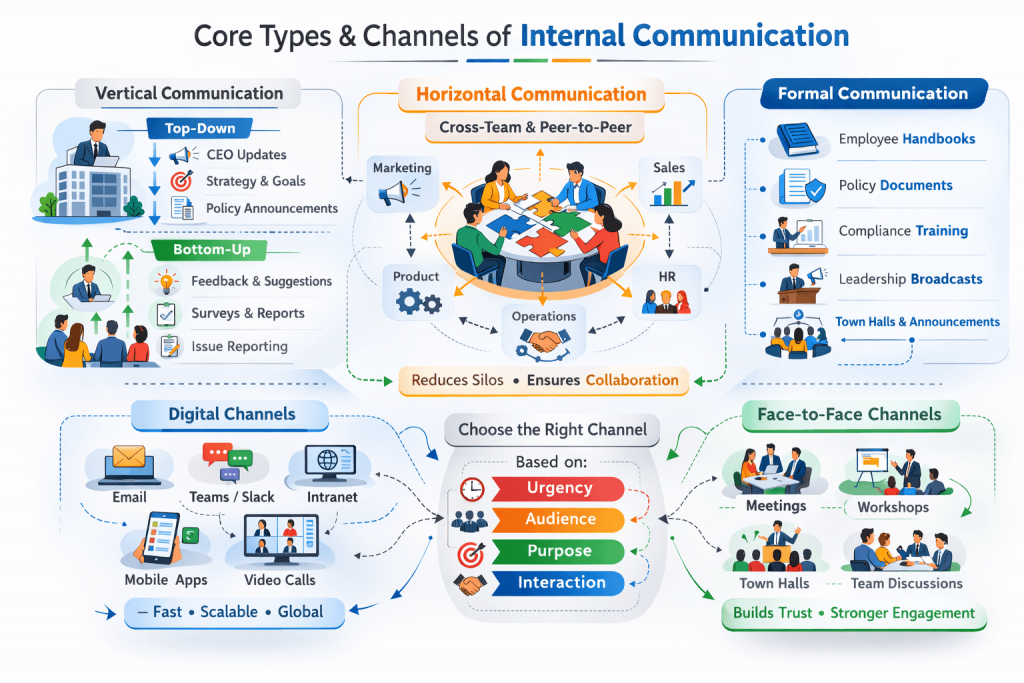
Vertical communication flows between different levels of the hierarchy. Top down communication includes CEO strategy emails, policy memos, and annual results town halls. Bottom-up communication includes suggestion boxes, engagement surveys, and structured incident reporting.
Horizontal Communication: Cross-Team and Peer-to-Peer
Horizontal communication occurs between individuals and teams at similar levels. Examples include cross-functional project squads, daily stand-ups, and coordination between marketing and sales on campaigns.
Strong horizontal communication and cross collaboration reduces silos, prevents duplicate work, and ensures consistent messaging to customers. Shared project boards, team chat channels, and cross-team workshops enable this coordination.
Pro Tip: Nifty makes this easier by giving marketing, product, operations, and leadership teams a shared place to track work and communicate without losing context.
Formal Communication
Formal communication represents the official company position—employee handbooks, policy documents, compliance training, and scheduled leadership broadcasts. Formal channels ensure legal compliance and maintain a single source of truth.
Format matters: clear headings, FAQs, and summaries make formal content easier to absorb, especially on mobile devices. Archive and index all formal communications with consistent naming conventions.
Informal Communication
Informal communication includes spontaneous interactions—hallway chats, Slack channels for hobbies, lunch-and-learns, and coffee chats between colleagues. These informal conversations build trust, spark creativity, and surface issues early.
However, informal channels can spread rumors when formal channels are lacking. Leaders should participate authentically without appearing to “monitor” conversations.
Digital and Face-to-Face Channels
Digital channels in 2026 include online collaboration tools such as email, Teams/Slack, intranet, mobile apps, video calls, and HR portals. Channel choice should depend on urgency, audience, and required interaction. However, in person meetings are a vital component of effective internal communication, as face-to-face interactions foster trust, engagement, and immediacy that digital methods alone cannot replace.
How to Build an Effective Internal Communication Strategy?
Internal communication in 2026 should be run with a clear strategy, not as ad-hoc emails. A strong internal communications strategy is essential for reducing costly productivity losses and improving overall efficiency within organizations. An effective internal communications strategy aligns with business objectives and defines goals, audiences, messages, channels, responsibilities, and success metrics for a 6-12 month horizon.
Clarify Goals and Audiences
Start with 3-5 specific organizational objectives:
- Raise awareness of 2026 strategy across all locations
- Improve frontline access to information by 40%
- Reduce rumor-driven incidents by 25% by December 2026
Segment audiences: frontline vs. office employees, managers vs. individual contributors, new hires vs. long-tenured staff. Create personas—like a warehouse supervisor on night shift who primarily uses a mobile app—to guide channel selection.
Design Key Messages and Narratives
Distill complex strategies into core messages that can be repeated consistently. Use storytelling: origin stories, customer impact examples, and “day-in-the-life” scenarios make messages memorable.
Align internal narratives with external brand positioning so employees understand the organization’s vision and don’t see conflicting stories. Plan message calendars around real dates: product launches, quarterly results, and major events.
Selecting Channels and Cadences
Map each key message to primary and secondary channels, considering access constraints. Not all employees have corporate email accounts.
Sample cadence:
- Weekly team updates from managers
- Monthly CEO notes via video and intranet
- Quarterly town halls covering strategy
- Daily operations bulletins where needed
Equip managers with briefing notes and FAQs within 24-48 hours of major announcements.
Turn internal communication into action with Nifty.
Get Started for Free
Enabling Two-Way Feedback Loops
Implement mechanisms for gathering feedback: always-open digital suggestion forms, pulse surveys, feedback widgets on intranet articles, and live Q&A in town halls. Provide anonymous options and clear non-retaliation statements.
Publish periodic summaries: “Top 5 questions from Q2 2026” with clear responses. Assign ownership for monitoring and responding so questions don’t go unanswered.
Measuring Success and Iterating
To measure internal communications success, track both quantitative and qualitative indicators.
Quantitative metrics:
- Open and click-through rates
- Intranet page views and read time
- Town hall attendance
- Survey scores for communication clarity
Qualitative indicators:
- Comments in internal forums
- Sentiment in free-text responses
- Manager anecdotes and focus group feedback
Compare data points over time (2024 vs. 2026) and adjust strategy in quarterly reviews.
Check out some best reporting tools to measure internal communication success.
Common Internal Communication Challenges (and How to Address Them)
Even with a strategy, organizations face recurring obstacles. The difference lies in whether you systematically address them.
Information Overload and Message Fatigue
When employees receive dozens of emails daily, critical updates get missed. Root causes include lack of editorial control, duplicated messages, and no audience segmentation.
Solutions:
- Implement a central content calendar
- Use clear subject lines with tags: “[Action required by 31 May 2026]”
- Consolidate into weekly digests
- Train managers to summarize key points
One company cut internal emails by 30% in 2025 by moving to a single weekly round-up.
Disconnected Tools and Information Silos
Multiple unintegrated systems cause employees to lose up to 2.5 hours daily searching for information.
Solutions:
- Create a centralized, searchable hub like Nifty
- Implement single sign-on across platforms
- Surface intranet articles inside Teams/Slack
- Decommission redundant tools over 12-18 months
Low Engagement and Lack of Trust
Signs include low town hall attendance, minimal survey responses, and skepticism about leadership messages. Increasing employee engagement is crucial and can be achieved by tailoring internal communication strategies and customizing messaging to different audience segments, making communication more relevant and effective.
Solutions:
- Involve employees earlier in decisions
- Share reasoning behind trade-offs
- Acknowledge past missteps honestly
- Introduce “Ask Me Anything” sessions
- Use credible peer messengers alongside executives
Track trust scores over time to measure improvement.
Reaching Frontline and Deskless Workers
Many frontline workers lack access to corporate email or desktop intranets.
Effective solutions:
- Mobile apps rolled out between 2021-2025
- QR codes linking to short briefings
- Pre-shift huddles with printed one-pagers
- Language localization and visual content
- Offline-friendly formats
Measure adoption rates and participation to ensure frontline teams are genuinely connected.
Practical Examples of Strong Internal Communication
Using Storytelling and Video to Humanize Leadership
Amazon launched an informal video series where executives answer employee questions and share career stories in plain language. Results included a 40% increase in Q&A participation and a 25% higher trust score.
Lessons: Keep videos short, schedule regularly, use subtitles, and solicit questions from all locations. Repurpose content as intranet articles and training snippets.
Creating a Central Wellbeing and Information Hub
Aviva created a dedicated hub aggregating mental health resources, benefits information, and self-service HR tools. Outcomes included a 35% reduction in HR ticket volumes and higher employee assistance program usage.
Design tips: Navigate by life event (new parent, relocation), include explainer videos, and update during awareness months.
Digitizing Training, Onboarding, and Safety Communication
DSV shifted to micro-learning—short mobile-friendly videos and scenario-based modules—and digitized safety training, reducing incidents by 20% within a year.
Best practices: Chunk into 5-10 minute modules, use real workplace footage, track completion, and follow up with refreshers.
Supporting Change and Integration During Mergers
RHI Magnesita used a dedicated intranet section to centralize updates, FAQs, and timelines during its merger. Multilingual content and “myth-busting” posts tackled rumors directly.
Results: Smoother integration, fewer resignations, and employees reporting they felt kept “in the loop.”
Tips and Best Practices for Everyday Internal Communication
Write Clear, Concise, Audience-Focused Messages
- Start with the reader’s perspective: what do they need to know and do?
- Use short subject lines with clear tags
- Include a “TL;DR” summary at the top of longer messages
- Use plain language and scannable formatting
- Get a colleague outside the project to review before sending
Make Communication Inclusive and Accessible
- Use inclusive language, avoiding jargon that doesn’t translate
- Provide translations for major working languages
- Caption videos and ensure readable font sizes
- Rotate live event times or provide recordings
- Consult employee resource groups on sensitive messages
Equip Managers as Communication Multipliers
Managers are often the most trusted information source. Provide ready-to-use toolkits: talking points, FAQs, and slide decks. Train managers annually on communication skills and give them 24-hour advance notice of big news.
Balance Consistency with Avoiding Overload
Create predictable rhythms—monthly newsletters on the first Wednesday, Friday recaps from team leads. Track message volume per week and set informal caps. Review patterns twice yearly and prune obsolete recurring messages.
What Are Some Best Internal Communication Tools?
Choosing the right tools is essential for effective internal communication in any organization. Here are three popular tools widely used to enhance collaboration and keep teams connected:
- Nifty: Nifty is especially useful for teams that want internal communication and project execution in one place. Instead of splitting updates across email, chat, docs, and spreadsheets, teams can use Nifty to manage tasks, discussions, timelines, milestones, and project visibility from a single workspace.
- Slack: A versatile messaging app designed for real-time communication, organized channels, and seamless integration with other workplace tools.
- Zoom: A video conferencing solution that facilitates virtual meetings, webinars, and face-to-face interactions, supporting remote and hybrid work environments.
The Bottom Line
Internal communication in 2026 is about clarity, alignment, and connection—not just sending messages. Organizations that communicate effectively see better engagement, faster execution, and stronger results.
Using the right mix of channels and a centralized platform like Nifty can help teams stay aligned, reduce silos, and keep work moving without confusion.
FAQs About Internal Communication
Who should own internal communication in a small or mid-sized company?
In organizations with fewer than 250 employees, the internal communications team function is often shared between HR and leadership.
How often should we communicate company-wide updates?
Frequency depends on your pace of change, but a common 2026 pattern includes weekly or bi-weekly short updates, monthly deeper dives, and quarterly strategy sessions.
What tools are essential to get started with better internal communication?
A minimal 2026 toolkit includes: reliable email platform, central intranet or knowledge hub, team chat tool (Slack or Teams), and video capability for leadership messages
How can we handle negative or sensitive news without damaging morale?
Share what you know, what you don’t know, and what you’re doing next—avoiding speculation. Inform managers first with talking points and support resources, then communicate promptly to affected employees.
How long does it take to see results from a new internal communications strategy?
Culture and engagement improve over 6-18 months with consistent messaging and celebrating small wins.