Skip to content
Creative Project Management: The Complete Practical Guide

A marketing campaign is about to launch. The design team is waiting for the final copy. The copywriter is confused about the latest changes. Feedback is scattered across emails and chat messages. The client asks for last-minute revisions. No one is sure which version is approved. The deadline gets pushed again. This situation happens in many teams.
Creative project management solves this problem. It helps teams define goals, create clear briefs, assign ownership, manage feedback, and track timelines.
This guide explains creative project management in simple terms. You will learn what it means, the main phases of a creative project, why projects fail even with good teams, and the key roles involved. You will also see practical best practices and a real example of launching a marketing campaign step by step.
Key Takeaways
- Creative project management helps teams deliver creative work on time without reducing creativity.
- Clear briefs and defined goals reduce confusion and rework.
- Structured workflows prevent delays during feedback and approvals.
- Defined roles and ownership improve accountability across teams.
- Using the right tools increases visibility and keeps communication in one place.
What Is Creative Project Management?
Creative project management is the structured process of planning, organizing, and managing creative work to ensure it is delivered on time, within scope, and aligned with business goals.
It brings structure to creative teams without limiting creativity. Teams follow clear workflows, defined timelines, and assigned responsibilities, while still allowing space for ideas, experimentation, and refinement.
Creative projects often involve multiple stakeholders and moving parts. Designers, writers, marketers, developers, and decision-makers must collaborate effectively. Deadlines must be tracked. Feedback must be organized. Approvals must be documented.
Without a clear system, creative work becomes chaotic. Deadlines slip. Feedback loops grow longer. Responsibilities become unclear.
Creative project management solves this by defining:
• Clear project goals and success metrics
• Defined roles and ownership
• Structured timelines and milestones
• Review and approval workflows
• Communication guidelines
This approach applies across many creative disciplines, including:
• Marketing campaign launches
• Brand redesign projects
• Website redesign and development
• Video production workflows
• Social media content planning and publishing
Also read: In-depth guide on marketing project management by Nifty
What Are the Phases of Creative Project Management?
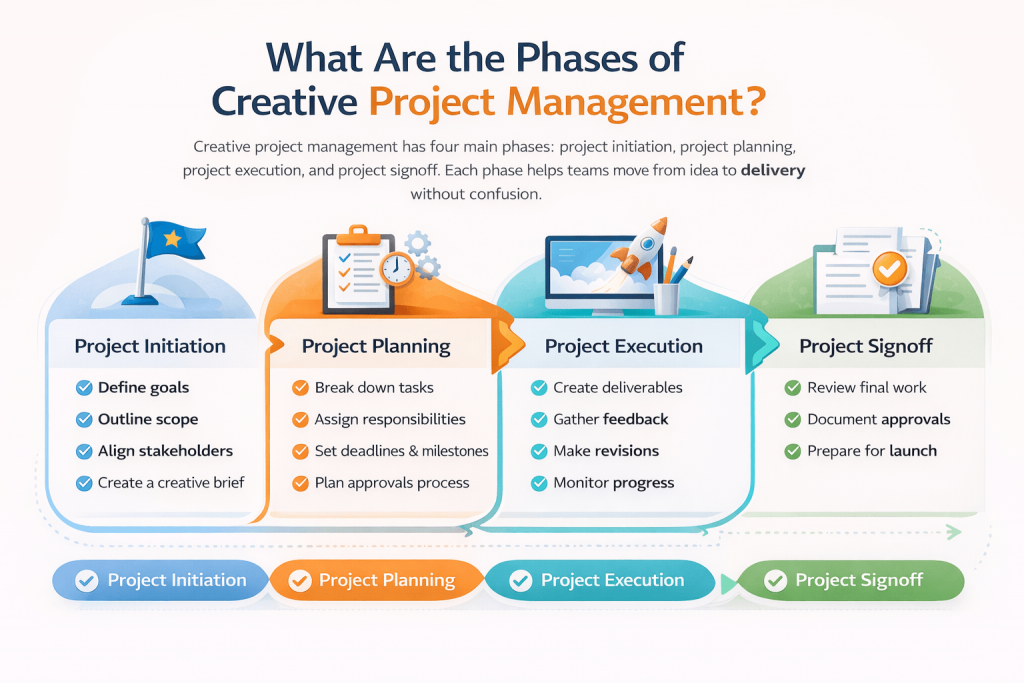
Creative project management follows four main phases: project initiation, project planning, project execution, and project signoff. Each phase helps teams move from idea to delivery without confusion.
- Project Initiation
Project initiation is the starting point of any project. This is where the team decides what they are trying to achieve.
At this stage:
• The business goal is clearly defined
• The creative objective is agreed upon
• The scope of work is outlined
• Stakeholders agree on what success looks like
Most teams create a creative brief during project initiation. The creative brief usually includes:
• Target audience
• Key message
• Deliverables
• Timeline
• Budget (if needed)
If project initiation is not clear, problems start later. Many project delays happen because expectations were not defined properly at the beginning. A strong start makes everything easier.
Read the complete guide on creative briefs with templates by Nifty
- Project Planning
Project planning turns the idea into a clear action plan. This is where strategy becomes structure.
During project planning:
• Large tasks are broken into smaller steps
• Responsibilities are assigned
• Deadlines are set
• Milestones are created
The team also decides:
• How feedback will be collected
• Who approves what
• When approvals will happen
Good project planning reduces confusion. It gives everyone clarity about what needs to be done and when. Without proper planning, teams often rush at the last minute.
Plan and track creative work in one place.
Get Started for Free
- Project Execution
Project execution is where the real work happens. This is when ideas become real deliverables.
During project execution:
• Designers create visuals
• Copywriters write content
• Video teams film and edit
• Social media teams prepare posts
Feedback is active in this phase.
• Drafts are reviewed
• Changes are requested
• Revisions are made
The project manager tracks progress and timelines. Project execution needs balance. The team must protect creativity while keeping the project on schedule.
- Project Signoff
Project signoff is the final step. This is when the work is reviewed and approved.
During project signoff:
• Stakeholders review the final version
• Approvals are documented
• Assets are prepared for launch or delivery
This phase confirms that all deliverables meet the agreed standards. Once approval is given, the project is officially complete.
Some teams also do a short review to learn what worked well and what can improve next time. Project signoff removes confusion. It clearly defines that the work is done.
Get the 10 Step Marketing Project Management Framework Guide
Why Creative Projects Fail? Even With Great Teams
Creative projects fail because structure breaks down, not because teams lack talent. Even skilled designers, writers, and marketers struggle when systems are weak.
- Poor or Vague Creative Briefs
A weak creative brief creates confusion from the start. When goals, audience, deliverables, or success metrics are unclear, teams are forced to guess. Guesswork leads to revisions, delays, and frustration.
- Scope Creep
Scope creep happens when new tasks are added after the project begins without adjusting timelines or resources. Extra design requests, additional campaign channels, or unexpected revisions increase workload and push deadlines.
- No Clear Ownership of Deliverables
Projects slow down when no single person owns a task. When ownership is shared without clarity, accountability becomes weak. One deliverable should always have one responsible owner.
- Missed Approval Deadlines
Creative projects depend on timely approvals. When stakeholders delay feedback or decision-making, the entire schedule shifts. Even small approval delays can create large delivery gaps.
- Communication Scattered Across Tools
When feedback is spread across email, chat, and different file platforms, important details get lost. Teams waste time searching for information instead of moving the project forward.
Manage feedback and approvals in one place with Nifty
Get Started
Key Roles in Creative Project Management
Creative project management works best when every role is clearly defined. Each person has a specific responsibility that keeps the project moving forward.
Creative Project Manager / Producer: The creative project manager or producer plans the project, assigns tasks, tracks deadlines, and manages communication. This person ensures the work moves from brief to delivery without delays.
Creative Director: The creative director sets the creative vision and quality standards. This role ensures that designs, messaging, and overall output align with brand guidelines and campaign goals.
Designers / Creatives: Designers and creatives produce visual assets such as graphics, layouts, branding elements, and videos. They turn ideas into visual outcomes based on the approved brief.
Copywriters / Content Creators: Copywriters and content creators develop written content. This includes campaign messaging, website copy, scripts, blog posts, and social media captions.
Marketing or Campaign Lead: The marketing or campaign lead connects the creative work to business strategy. This role ensures that the project supports marketing objectives, target audience needs, and performance goals.
Stakeholders / Clients: Stakeholders or clients provide direction, feedback, and final approvals. They confirm that the project meets expectations and aligns with business priorities.
Clear roles reduce confusion. When everyone understands their responsibility, creative projects move faster and with fewer conflicts.
5 Creative Project Management Best Practices
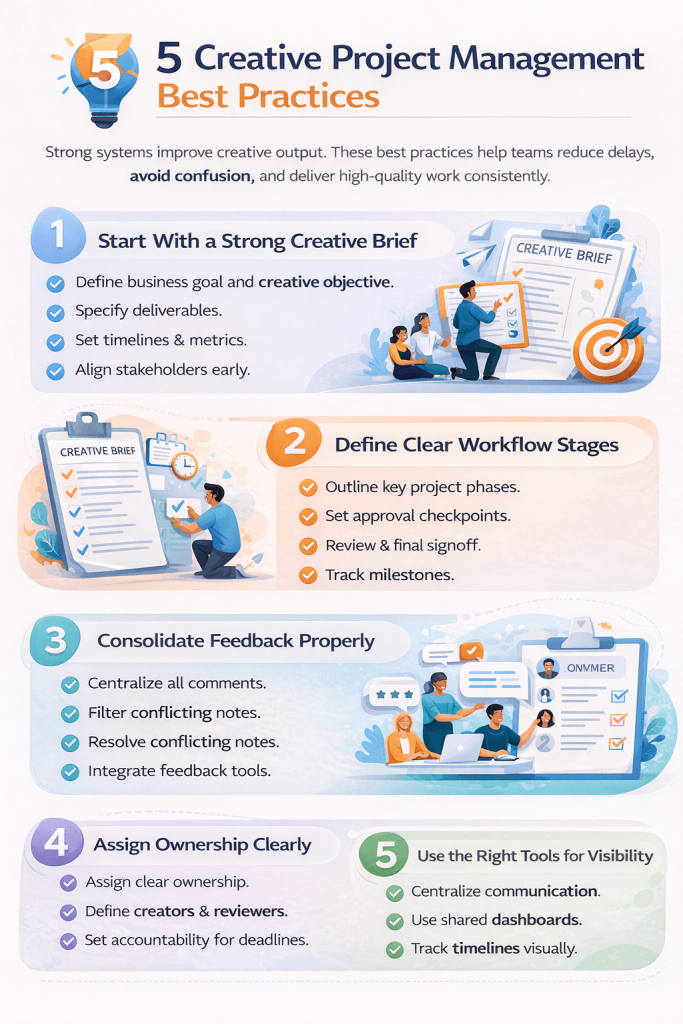
Strong systems improve creative output. These best practices help teams reduce delays, avoid confusion, and deliver high-quality work consistently.
1. Start With a Strong Creative Brief
A strong creative brief gives direction before any work begins. It reduces assumptions and prevents rework later.
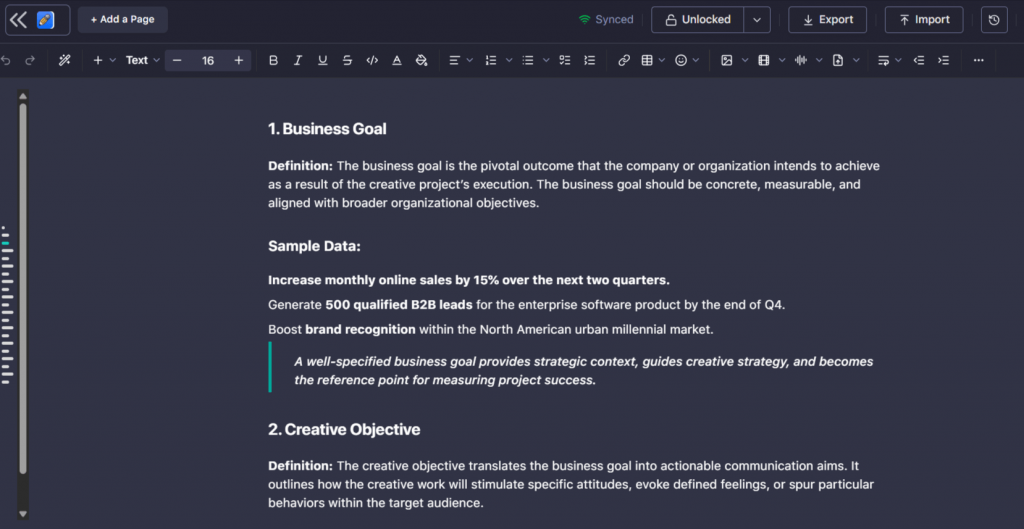
Define business goal and creative objective.
The business goal explains what the company wants to achieve, such as increasing sales by 15 percent or generating 500 qualified leads. The creative objective explains how the project will support that goal, such as building brand awareness or promoting a new product feature.
Clarify audience and tone.
The target audience must be specific. For example, first-time buyers aged 25 to 35 or small business owners in retail. Tone must also be clear, such as professional, friendly, bold, or informative.
Specify deliverables and formats.
List every output clearly. Examples include five Instagram posts, one landing page, two email campaigns, or a 60-second promotional video. Mention formats like PNG, MP4, or HTML.
Set clear timelines and success metrics.
Deadlines must be realistic and visible to everyone. Success metrics should be measurable, such as click-through rate, engagement rate, conversions, or website traffic.
Align stakeholders before production begins.
All decision-makers must review and approve the brief before work starts. Early alignment reduces major revisions later.
A detailed brief does not limit creativity. It creates focus.
2. Define Clear Workflow Stages
Creative work needs defined steps. Clear workflow stages reduce confusion and improve speed.
Concept approval before execution.
Teams should approve ideas before moving into design or production. Approving a concept early prevents wasted effort.
Draft and review separation.
Draft creation and review must be separate steps. Creatives produce the first version. Stakeholders review and provide feedback. Mixing these steps creates confusion.
Final approval process.
The final version must go through a structured approval step. Only authorised decision-makers should give final signoff.
Milestone checkpoints.
Set checkpoints at key stages. For example, concept approval, first draft review, final draft review, and launch readiness. Milestones help track progress and reduce last-minute pressure.
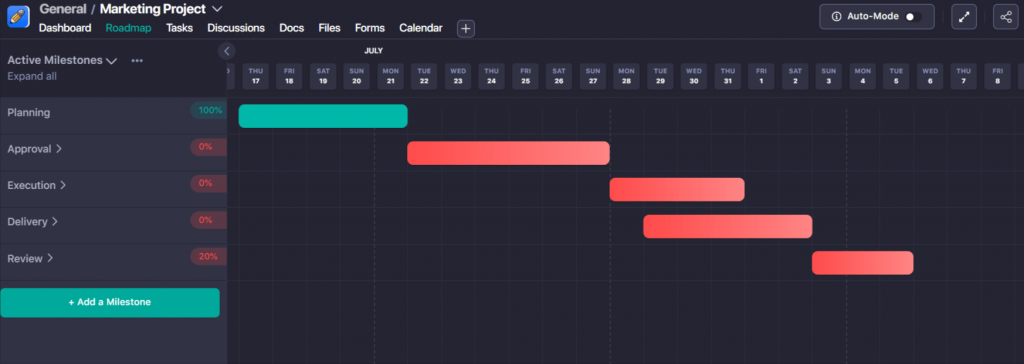
A defined workflow creates rhythm. Teams know what happens next.
3. Consolidate Feedback Properly
Feedback management is one of the biggest challenges in creative project management. Poor feedback handling causes delays and frustration.
One person gathers stakeholder feedback.
A single point of contact should collect all feedback. This person combines comments before sharing them with creatives.
Resolve conflicting feedback before sending to creatives.
Stakeholders often disagree. Conflicts must be resolved internally before passing feedback to designers or writers. Creatives should not receive mixed instructions.
Keep feedback inside project tools.
All comments should stay in one system. Avoid scattered feedback across emails, chat, and calls. Centralised feedback reduces misunderstandings and saves time.
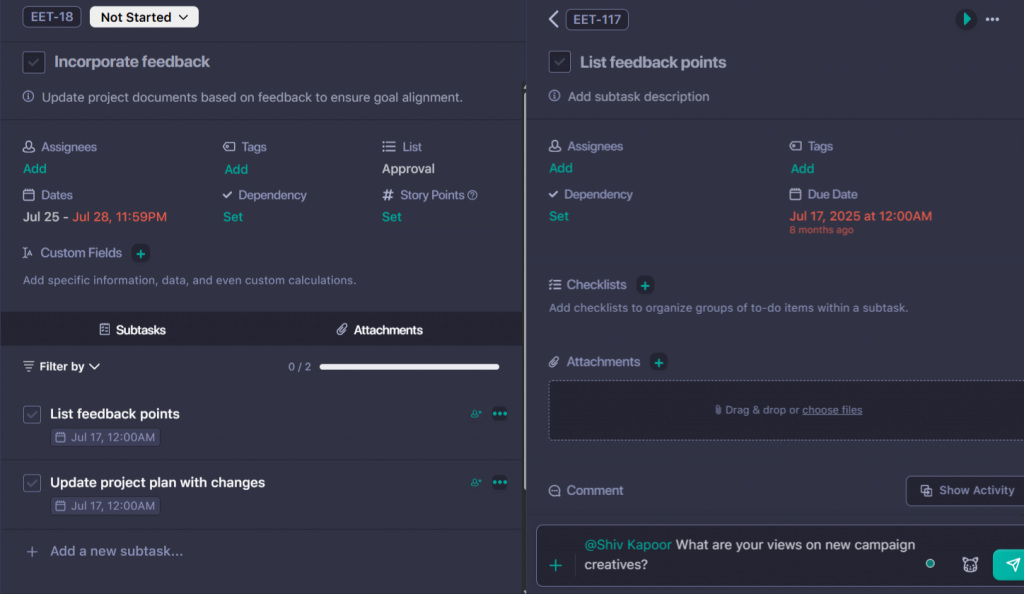
Clear feedback systems reduce revision cycles and protect creative focus.
4. Assign Ownership Clearly
Ownership improves accountability. Every task must have a clear responsible person.
One owner per deliverable.
Each asset should have one primary owner. Shared ownership often causes delays because no one takes final responsibility.
Define who creates, reviews, approves.
The workflow should clearly show who produces the work, who reviews it, and who approves it. This avoids confusion at each stage.
Clarify accountability.
Deadlines and quality standards must connect to specific individuals. When accountability is visible, tasks move faster. Here’s a snapshot on how you can set a due date and set accountability for the tasks.
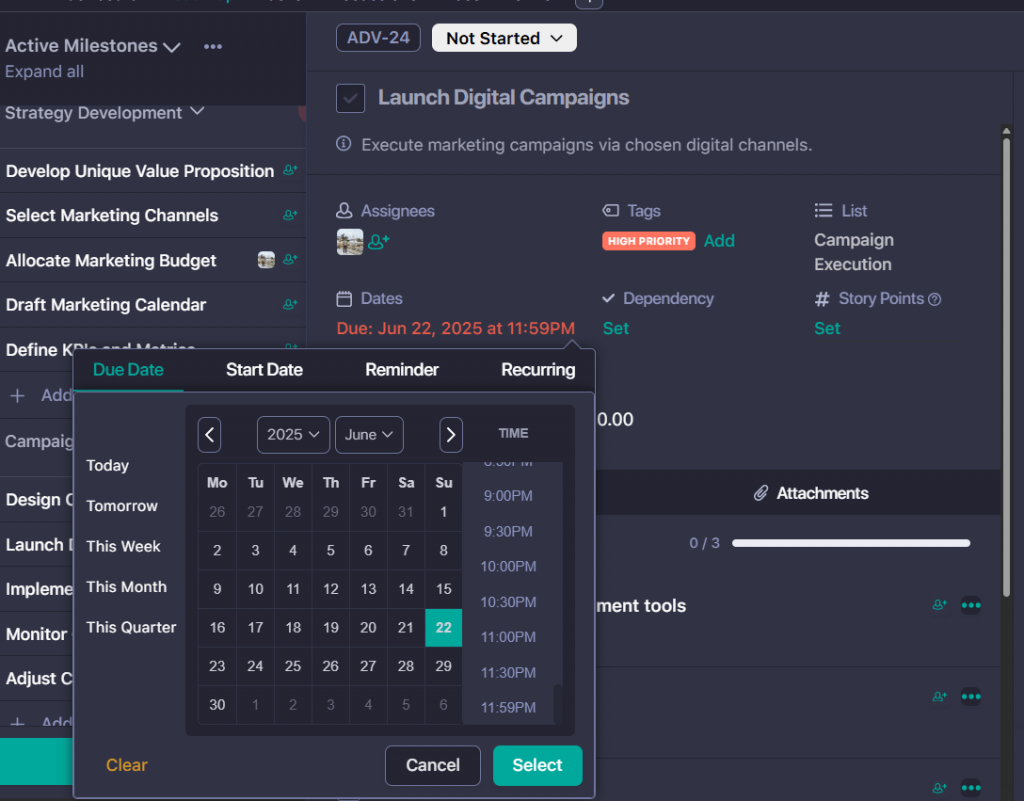
Clear ownership reduces follow-up messages and status meetings.
5. Use the Right Tools for Visibility
Creative projects involve many moving parts. Tools improve transparency and coordination.
Centralised communication.
Teams should communicate within one platform where tasks, files, and feedback live together.
Shared dashboards.
Dashboards give a real-time view of progress, deadlines, and workload. Everyone can see project status at a glance.
Timeline tracking.
Visual timelines or Gantt charts help teams understand dependencies and upcoming deadlines.
Document management.
Files, briefs, and revisions should be stored in one accessible location with version control.
Reduced tool switching.
Fewer tools mean fewer lost details. Keeping work inside one system improves clarity and saves time.
See the best creative project management Tools
Tools do not replace good processes. They support them. When used correctly, they increase visibility and reduce friction across teams.
Real Example of Creative Project Management (Practical Workflow)
Launching a marketing campaign requires clear steps, defined ownership, and structured feedback. Below is a simple example of how creative project management works in practice.
Step 1: Project Initiation
A company plans to launch a new product. The business goal is to generate 1,000 qualified leads in 60 days. The creative objective is to create awareness and drive traffic to a landing page.
The creative project manager gathers stakeholders. They define the target audience, key message, campaign channels, budget, and deadline. A clear creative brief is created and approved before any work begins.
This step prevents confusion later.
Step 2: Project Planning
The team lists all deliverables. For example:
- Landing page design and copy
- Five social media posts
- Two email campaigns
- One promotional video
- Paid ad creatives
Each task is assigned to a specific owner. Designers handle visuals. Copywriters draft messaging. The marketing lead manages paid ads. Deadlines are mapped on a shared timeline.
Milestones are set. Concept approval comes first. Draft review follows. Final approval happens before launch.
The workflow is visible to everyone.
Step 3: Project Execution
Designers create campaign visuals based on the approved concept. Copywriters develop landing page content and ad copy. The video team produces and edits the promotional video.
All drafts are uploaded into the project tool. The creative project manager collects feedback from stakeholders. Conflicting comments are resolved before sending consolidated feedback to the team.
Revisions happen in defined rounds. Deadlines are monitored closely.
Because ownership is clear, tasks move forward without confusion.
Step 4: Review and Signoff
The final landing page, social posts, emails, and video are reviewed together. The marketing lead confirms that messaging aligns with campaign goals. Stakeholders provide final approval.
Once approved, assets are scheduled and published according to the campaign calendar.
The project manager closes the project and documents lessons learned. The team reviews performance metrics such as click-through rate, engagement rate, and lead conversions after launch.
This example shows how creative project management reduces chaos. Every phase connects clearly. Ownership is visible. Feedback is controlled. Deadlines are realistic. Without this structure, the same campaign could face delays, missed approvals, and last-minute changes.
Best Tool Use for Creative Project Management by Teams
Creative teams need tools that bring tasks, communication, and timelines into one place. Managing projects across email, chat apps, spreadsheets, and file-sharing tools creates confusion. A unified system improves visibility and reduces delays.
One example of a project management platform used by marketing and creative teams is Nifty. It combines project planning, collaboration, and tracking inside a single workspace. Instead of switching between multiple tools, teams can manage the entire workflow in one system.
Here are some practical features that support creative project management:
- Centralised communication
Discussions happen inside tasks and projects. This keeps feedback connected to the work. - Task and milestone tracking
Teams can assign tasks, set deadlines, and track progress through milestones. - Timeline and Gantt view
Visual timelines help teams see dependencies and upcoming deadlines clearly. - Shared dashboards
Dashboards show overall project health, workload, and completion status - Document and file managementFiles, briefs, and revisions stay inside the project workspace with version tracking.
- Reduced tool switching
When tasks, communication, and documents live in one place, teams spend less time searching for information.
Tools alone do not fix broken processes. However, when combined with strong briefs, clear workflows, and defined ownership, the right platform improves transparency and accountability.
Creative project management works best when visibility is high and communication is structured. A single collaborative system supports that goal.
We have reviewed some best creative project management tools, you can pick according to your choice from this list.
Final Takeaway
Creative project management brings structure to creative work without reducing creativity. It helps teams plan clearly, manage feedback properly, assign ownership, and deliver projects on time.
Creative projects fail when briefs are weak, roles are unclear, and communication is scattered. Even talented teams struggle without a system. Clear goals, defined workflows, and visible timelines reduce confusion. Structured feedback prevents endless revision cycles. Strong ownership improves accountability.
Marketing campaigns, brand redesigns, website launches, video production, and social media content all benefit from the same foundation. Start with a clear brief. Plan tasks with milestones. Manage feedback in one place. Assign one owner per deliverable. Use tools that improve visibility.
Creative freedom works best when supported by structure. When teams know what to do, who is responsible, and when deadlines are due, they can focus on producing high-quality creative work that meets business goals.
Frequently Asked Questions (FAQs)
1. What makes creative project management different from traditional project management?
Creative project management allows flexibility while maintaining structure. Traditional projects often follow fixed steps and predictable outputs. Creative projects involve evolving ideas, multiple feedback rounds, and subjective reviews. This requires structured workflows without limiting creative thinking.
2. How do you prevent scope creep in creative projects?
Scope creep is prevented by defining clear deliverables and approval boundaries at the start. A detailed creative brief should list all outputs, formats, timelines, and revision limits. Any new request should go through a change approval process before being added to the project.
3. Who should own a creative project?
A creative project manager or producer should own the overall project. However, each deliverable must also have one clear owner. For example, a designer owns visual assets, a copywriter owns messaging drafts, and a marketing lead owns campaign alignment.
4. How many feedback rounds should a creative project have?
Most creative projects should define two to three feedback rounds. Unlimited revisions delay timelines and increase confusion. Clear revision limits help teams focus on quality while protecting deadlines.
5. What tools are best for managing creative projects?
The best tools combine task management, communication, timelines, and file storage in one place. Platforms like Nifty allow teams to manage milestones, track progress, centralize feedback, and reduce tool switching. The tool should support visibility and collaboration without adding complexity.



 2026 © Nifty Technologies, Inc. All rights reserved.